

Rising Risks and Evolving Markets: Exploring The Regulators 2025
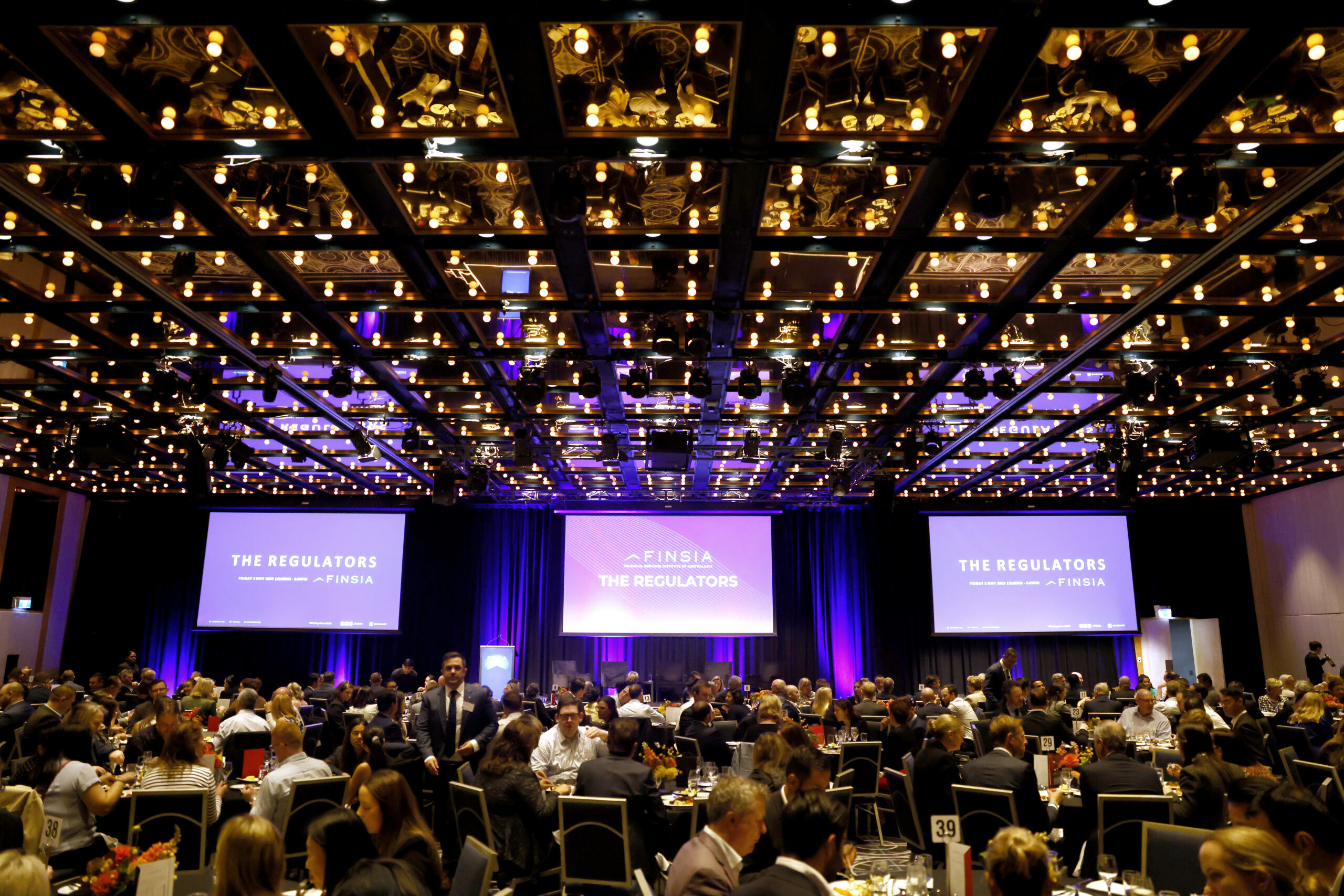
FINSIA’s highly anticipated event, The Regulators, is back in 2025, bringing together some of the most influential voices from Australia and New Zealand's regulatory landscape. This cornerstone event promises to provide unparalleled insights into the evolving regulatory environment and how financial institutions can navigate the rising risks and shifting expectations that are reshaping the financial services industry.
This year, FINSIA will feature five key figures who are shaping the regulatory framework of the region:
-
Therese McCarthy Hockey, Executive Board Member, APRA
-
Dr. Brad Jones, Assistant Governor (Financial System), RBA
-
Simone Constant, Commissioner, ASIC
-
Brendan Thomas, CEO, AUSTRAC
-
Angus McGregor, Acting Assistant Governor (Financial Stability), RBNZ
These leaders will dive into the regulatory priorities for 2025 and beyond, unpacking the challenges highlighted in previous years—such as cybersecurity, geopolitical tensions, and monetary uncertainty—and examining how these issues have evolved and will continue to impact financial services.
Evolving Market Dynamics: Private Markets, Superannuation, and Public Listings
As the global financial landscape continues to evolve, ASIC has been focusing its efforts on understanding the shifting dynamics between public and private markets. The trends in 2025 suggest that more companies are opting for private funding routes, with initial public offerings (IPOs) on public equity markets declining. This is not just an Australian trend; globally, the number of public listings is falling, and an increasing number of companies are choosing to de-list as they find more attractive opportunities in private markets.
The rise of superannuation funds is another significant development influencing Australian markets. With super funds now managing a large portion of capital, their investment decisions are playing an increasingly pivotal role in how capital is allocated—both domestically and globally. This shift has profound implications for how businesses raise funds and where capital is deployed in the economy.
In February 2025, ASIC released a discussion paper exploring these very dynamics, focusing on the health and future of Australia’s markets. The paper highlights the growth in private markets, the decline in public listings, and the emerging dominance of superannuation funds in capital deployment. ASIC has received almost 90 submissions from industry bodies, market operators, fund managers, and stakeholders, and the feedback has been overwhelmingly positive.
ASIC's Chair, Joe Longo, emphasized the need for both public and private markets to thrive together to drive greater investment, growth, and employment opportunities. As the regulator continues to analyze these submissions, it is clear that ASIC is looking for ways to strike a balance between supporting traditional public markets and adapting to the rapidly growing private market sector.
What to Expect:
-
Increased focus on the changing landscape of private markets and their implications for public market regulations
-
Ongoing research and stakeholder consultations to better understand the role of superannuation funds in capital formation
-
Potential regulatory adjustments aimed at fostering a dynamic and inclusive financial ecosystem
Geopolitical Tensions and Financial System Stability: Navigating Uncertainty
The global landscape in 2025 remains marked by geopolitical tensions, from trade wars to military conflicts, which continue to influence financial systems. This year, Dr. Brad Jones from the RBA and Angus McGregor from the RBNZ will be at the forefront of discussions on how these tensions affect financial stability in the Australasian region.
Central banks are actively monitoring global economic instability and its effects on domestic markets. The RBA has been focused on managing inflation while ensuring that monetary policy does not destabilize the broader financial system. RBNZ, under Angus McGregor, has been working on strengthening macroprudential measures to manage risks emerging from foreign exchange volatility and changing trade dynamics.
In the face of mounting international risks, these regulators are discussing how financial institutions can better prepare for shocks, ranging from changes in global commodity prices to potential market disruptions caused by geopolitical instability.
What to Expect:
-
Updated strategies from central banks to manage international financial shocks
-
Risk management frameworks to address global trade disruptions
-
Financial stability measures targeting volatility caused by geopolitical events
Innovation, Financial Integrity, and Trust: Balancing Growth with Responsibility
As financial institutions innovate, regulators must ensure that new technologies and financial products do not compromise public trust or market integrity. Since the start of the year, ASIC, AUSTRAC, and RBNZ have continued to adapt their regulatory frameworks to allow for financial innovation while protecting consumers.
ASIC has been particularly active in overseeing the development of digital assets, including cryptocurrencies. Simone Constant has highlighted the growing need to regulate digital finance without stifling innovation, ensuring that new financial products meet compliance standards for consumer protection and market transparency.
AUSTRAC, under Brendan Thomas, has expanded its focus on regulating cryptocurrency exchanges and digital wallets to ensure that financial crime risks are minimized. The agency has also increased efforts to track illicit activities through enhanced AML/CTF regulations.
Similarly, RBNZ is exploring how to integrate green bonds and climate-related financial disclosures into New Zealand’s financial system. Angus McGregor has emphasized the importance of aligning financial innovation with long-term sustainability goals.
What to Expect:
-
Evolving frameworks for digital assets, blockchain regulation, and crypto compliance
-
Increased focus on financial crime in digital finance
-
The role of green finance and climate risk in future-proofing financial markets
Safeguarding Financial Stability in a Digital World
One of the most pressing concerns for regulators this year has been cybersecurity. As financial services increasingly rely on digital infrastructure, regulators like APRA, ASIC, and AUSTRAC are tightening requirements for cybersecurity risk management.
Since the beginning of 2025, APRA, under the leadership of Therese McCarthy Hockey, has been enforcing CPS 230, a set of guidelines designed to bolster financial institutions' resilience to cyber threats. With growing concerns about systemic risks posed by cyber breaches, APRA has heightened scrutiny on banks and insurers to improve their cybersecurity measures and enhance transparency.
ASIC, led by Simone Constant, has taken a more enforcement-driven approach, cracking down on firms with inadequate cybersecurity controls, especially those who fail to protect sensitive client data. With the rise in digital asset adoption, AUSTRAC has also emphasized ensuring that financial service providers comply with stringent cybersecurity and AML/CTF regulations to safeguard against cybercrime and financial fraud.
What to Expect:
-
Enhanced regulatory frameworks and expectations around cyber resilience
-
Regulatory actions targeting institutions with poor cybersecurity practices
-
Growing focus on the security of digital assets and cryptocurrency exchanges
Zooming in on Financial Crime: New Regulatory Priorities and AML/CTF Reforms
AUSTRAC, Australia’s financial intelligence agency, has ramped up its efforts to combat money laundering, terrorism financing, and other serious crimes. Brendan Thomas, AUSTRAC’s CEO, outlined the agency’s regulatory priorities for the financial year, focusing on a shift in approach—moving from simply checking compliance to addressing substantive risks and harms.
In 2025, AUSTRAC’s focus has expanded to include the regulation of ‘Tranche 2’ industries, which encompass high-risk sectors such as real estate, lawyers, accountants, and precious metal dealers. This significant regulatory expansion is in preparation for major legislative reforms slated for July 2026. The Tranche 2 industries will now be subject to the same rigorous AML/CTF (Anti-Money Laundering and Counter-Terrorism Financing) compliance standards as financial institutions.
In addition to expanding its regulatory scope, AUSTRAC is enhancing its intelligence capabilities to better detect sectors that are failing to manage financial crime risks adequately. One area of particular concern is the rise of digital currencies, which enable fast and anonymous cross-border transactions. AUSTRAC has noted that despite the decline in cash usage in Australia, more than $100 billion in cash remains in circulation—posing a substantial risk for money laundering.
This year, AUSTRAC is scaling up its workforce and technological infrastructure to accommodate an estimated 80,000 new businesses that will come under the AML/CTF regime. The agency is also focusing on improving industry-wide standards and providing clearer expectations to businesses on what is required for compliance.
What to Expect:
-
Significant changes to the regulation of ‘Tranche 2’ industries, including real estate, law firms, and accountants
-
Increased regulatory scrutiny of high-risk sectors, particularly digital currencies and cash-intensive businesses
-
Major legislative reforms in 2026, with AUSTRAC preparing businesses for changes in AML/CTF compliance
Stay Ahead of the Regulatory Curve in 2025
Join FINSIA’s The Regulators to hear directly from APRA, ASIC, AUSTRAC and other key regulators shaping the future of financial services in Australia and New Zealand. Gain critical insights, prepare for emerging challenges, and connect with industry leaders.
Register now to secure your place at this essential event for professionals managing risk, compliance, and policy in a transforming regulatory landscape.


